Cop caught on tape telling blacks why he pulled them over

WGN9 MIDDAY NEWS:  Reporter: Judy Wung / Video

Submission Post by Gail Noble

We often say,  the only reason he/she pulled me over is,  because I’m Black/Mexican. This Chicago Police, is confortable saying, what most Policers Officers think.  In reality the officer will say, I pulled you over because your right tail light is out, or your brake lights were not working, you were making a left turn and your blinker light is out,  the tint on your windows is to dark.

This stop includes, the officer asking for your license in one breath, and the next breath, asking if anyone in the car is on probation or parole?  If the answer is yes,  it a whole new ball game, it give the officer permission, to search you, ask  everyone for their identification,  run a check on everyone, to see if anyone has any warrants,

The officer might say I smell Marijuana, or alcohol, the officer will require you, and sometimes everyone in the car to step out of the car and take the alcohol-breathalyzer to see if anyone is under the influence of alcohol/ controlled substance.  if you just so happen to blow 00″s, you might find your self on the way to the Police Station for a urine and blood test, just to make sure. Continue reading

I Smell a Rat: The Use of Snitch Testimony in Obtaining Criminal Convictions

– Post Submission By Cesar Flores

The ACJP crew had an early morning. We all saddled up and went to the Northern California Innocence Project’s (NCIP) monthly continental breakfast presentation.

It was very informative, looking at a different insight on how a testimony against a fellow inmate could become such a big mess due to what one inmate gains from giving a testimony.

A video that was shown about how an inmate got all of the information on his fellow inmate through posing as a criminal investigation officer and district attorney. He said that gaining evidence against another inmate in jail “is a market.”

Reflecting on the breakfast, I’m Glad I woke up early to go. Maybe you could come next time.

More information on today’s breakfast is below.

I Smell a Rat: The Use of Snitch Testimony in Obtaining Criminal Convictions

Speaker: Chuck Sevilla

Convictions based on the testimony of jail house snitches, someone who stands to gain something in exchange for his testimony against another, contribute to more than 15% of the cases of wrongful conviction overturned by DNA testing. Yet snitch testimony is frequently used at trial. Using case examples, we will explore the use and misuse of snitch testimony and the risks inherent in that use, such as: How and when do prosecutors rely on “snitch” testimony? What motivates snitches to provide this information. Why does California now require inmate snitch testimony to be corroborated?

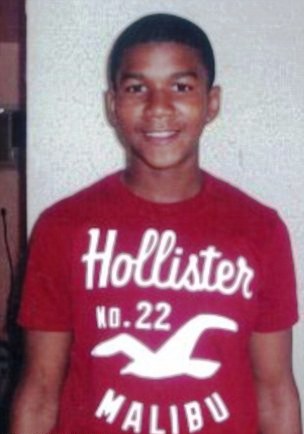
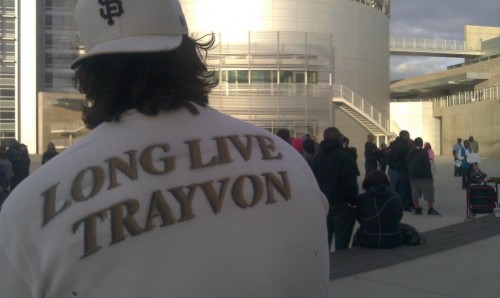
For Trayvon Martin And America, Justice Hinges on Two Words: “Prosecutorial Discretion”

As the tragedy of Trayvon Martin’s death calls the country to examine the racial inequities of the criminal justice system, the conversation must go beyond the impulse to only focus on the man who took his life, George Zimmerman, and the police who let him walk out of their station. If we are to have any meaningful impact on how the system really works, we have to go where the real power lies – with the prosecutors, the ones who control the levers of the system in counties and states across the country.

In Martin’s case, it was prosecutor Norm Wolfinger who decided that Zimmerman should be not charged or detained that fateful evening. That moment of choice by Wolfinger is the most revealing part of the Trayvon Martin tragedy in terms of the vulnerabilities of the criminal justice system. Wolfinger was not acting as a rogue decision-maker circumventing the rules of law enforcement – he was exercising “prosecutorial discretion” – the awesome legal authority given to prosecutors to decide if an act is a matter, or not, for the criminal justice system to consider. Continue reading

Stopdeportingyouth.com — New Site Highlights Local Efforts to Stop Juvenile ICE Holds in San Mateo County

With the Stanford Immigrants Rights Clinic, Community Legal Services in East Palo Alto, Immigrant Legal Resource Center, Youth United for Community Action, ACLU North Peninsula Chapter, Comite de Padres Unidos, and Nuestra Casa, we at Silicon Valley De-Bug have helped lead efforts to stop San Mateo County Probation’s practice of juvenile ICE holds in San Mateo County.  Families have come to De-Bug seeking support for their son’s or daughter’s cases where they have been caught up in juvenile hall and then sent to immigrant detention centers across the country — youth as young as 13. For the last four years, we’ve seen an increase in this number of families like no other, beginning with one mother from East Palo Alto who was so distraught at the thought of her 16 year old daughter being deported back to a country that she left when she was 3.  We learned that it was her PO who reported her to ICE, and initially, we thought it was a mistake.  But it turned out to be the complete opposite — this was actually routine practice.  In fact, San Mateo County is the second highest referrer of juveniles to ICE in California — second only to Orange County, according to statistics obtained by Immigrant Legal Resource Center from the Office of Refugee Resettlement.

As part of the coalition’s efforts in the last nine months, we at De-Bug created this page, www.stopdeportingyouth.com, to highlight not just the practice of referring youth to ICE, but the strong stance that a broad-based coalition has taken to urge our county to do otherwise. We believe San Mateo County can do better.  Submission Post by Charisse Domingo

Click here or on the picture below to take you to the site.

Trayvon Martin, Unarmed and Innocent: New York Times

Another Tragic death. We all should take deep look at our laws and the ways they affect people in practice before another tragic occurrence like this happens. Check out this moving article by a 19 year old teen from New York speaking his thoughts on the incident. – Post Submission by Cesar Flores

You would never think a walk to the store would get you killed, right? Well, that was what happened to 17-year-old Trayvon Martin. As he was coming back home from the store carting an iced tea and Skittles, a neighborhood watch volunteer named George Zimmerman felt “intimidated” by the young man and shot him, killing him.

This brings up a lot of questions: When does an innocent high school student become “intimidating,” “threatening” or “suspicious”? How intimidating can someone be with a few munchies in their hand, just walking down the street? If you’re a black kid with a hoodie, is it immediately assumed that you’re “bad” or a “troublemaker”? Would things have been different if Martin was a white kid strolling down the street or if he had been dressed differently? Continue reading

De-Bug Media: Profile of a Public Defender Who’s From the Community He Serves

Andy Gutierrez, SCC Deputy Public Defender

Check out the profile of Santa Clara County Deputy Public Defender Andy Gutierrez. We first met Andy when he represented an ACJP family who’s grandmother was facing a 3 year sentence for an alleged dirty bottle. Everyone said it was a done deal – she was headed to prison. Gutierrez was determined to keep her with her family, and she ended up with an outpatient drug program instead. She is doing great, and it wouldn’t have happened without Andy.

By Diane Solomon — Andy Gutierrez defends poor people accused of committing Santa Clara County’s most heinous crimes. Before I spoke to him, his Deputy Public Defender job seemed awful and really hard to me. But when he explains his work, he conveys this sense of commitment, a calling to a higher purpose and enthusiasm.

“I always knew I wanted to go into criminal law because I just liked it. I like the science part of it; I like the investigation part of it. What happens when you have to champion the underdog all of the time is that the chips are always down, so your life is interesting because every person you have to help is usually an amazing challenge.” Continue reading

NAM Ethno Blog: Is Prosecutorial Discretion Leading to Fewer Deportation Cases?

Are the prosecutorial discretion guidelines issued by the Obama administration last year having an effect on the number of deportation cases that the administration is pursuing?

By Leslie Berestein Rojas, New America Media — A new Syracuse University report suggests yes, federal immigration officials say no, and some lawmakers are calling “amnesty” nonetheless.
First, the report: Issued in recent days by the Transactional Records Access Clearinghouse at Syracuse University, the number of deportation proceedings begun in the nation’s immigration courts between October and December of last year (the first quarter of federal fiscal year 2012) “fell sharply to only 39,331 — down 33 percent from 58,639 filings recorded the previous quarter,” a drop of more than 10,000 cases filed. The report notes that since filings are typically lower at that time of year, the numbers were adjusted for seasonal drop-off. It continues:

This substantial drop may have been caused by the steps needed to implement the June 17, 2011 agency directive on prosecutorial discretion or as the indirect effect of the review announced August 18, 2011 by the Administration of all pending Immigration Court cases. The objective of these twin initiatives was to better target enforcement resources on high priority cases. Continue reading

KALW News: How Wrongful Convictions Happen, Interview with the Innocence Project

Check out the Q and A by KALW reporter Rina Palta as she sits down with Linda Starr of the Northern California Innocence Project. In the interview (also in audio form) Starr speaks about the commons reasons for wrongful conviction, and highlights the case of Maurice Caldwell who was released in March of 2011 after 20 years of incarceration for a crime he didn’t do. We had the honor of meeting Maurice at an Innocence Project  function — he, and the Innocence Project, inspire us deeply.