Time Saved: 3 Families Support Each Other to Beat a Collective of 41 Years to Life in Prison

Image

We had a powerful meeting this Sunday at ACJP, where three families all successfully resolved their cases through mutual support. They didn’t know each other a month ago, but will be forever united in their life stories. They live in different counties, even speak different languages at home.These images are a part of ACJP‘s “Time Saved” Series, documenting the stories, and amount of time saved from incarceration, due to community intervention in court cases. Submission and Photos by Charisse Domingo.

Click here to see the full story.  

Jeff Adachi’s Public Defender Justice Summit

ACJP/De-Bug Crew with our friend Rap, founder of Gideon's Promis

ACJP/De-Bug Crew with our friend Rap, founder of Gideon’s Promis

Last week, ACJP organizers drove up to San Francisco for the 10th Annual Public Defender Justice Summit. The summit coincided with the 50th Anniversary of the Gideon ruling, and as such lent itself to very timely and inspiring discussions. The panels of discussants were pioneering attorneys, film producers, authors, and other stakeholders of the criminal justice system who are invested in bringing more fairness to the courts. The event was organized by Jeff Adachi, the elected San Francisco Public Defender. Continue reading

There’s Something About Mary’s Family: Bringing Loved Ones Home After Three Strikes Reform

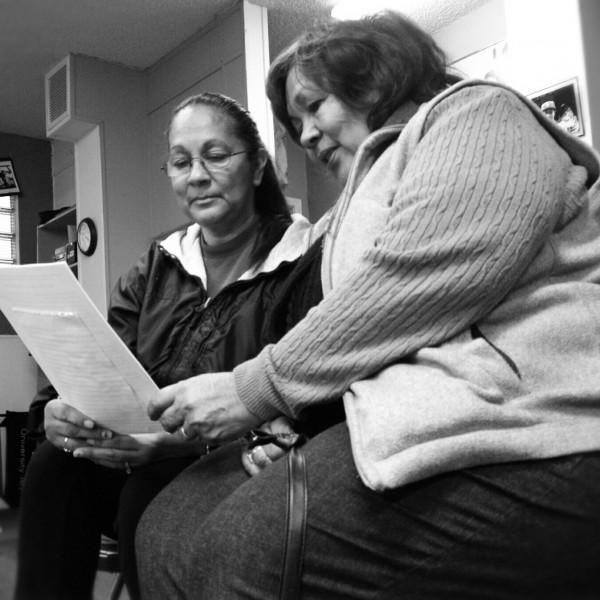
Mary (left) and her mother review paperwork to bring her brother home.

(Post by Raj Jayadev)

Mary came to the first Sunday ACJP meeting after the election with a new look in her eye, and sat with a calm yet ready presence of revitalized hope. Mary’s brother has been in the state prison system for nearly 20 years for a non-violent crime due to the Three Strikes Law. Prior to the passage of Proposition 36, Mary had been attending De-Bug’s ACJP meetings, regularly working with other families to try to find a pathway to bring him home. They explored the appellate process, poured over all of his paperwork, and called attorneys from numerous counties to find some avenue of relief. The odds seemed stacked against them, but Mary and her family maintained a hope in something that transcended the limits of probability, and turned a deaf ear on those who said to just give up.

A few months ago, one of ACJP’s lead facilitators, Blanca, started to talk to Mary about a proposition that was going to be on the ballot that could be the vehicle she had been praying for. That proposition, Proposition 36, would allow California voters to amend the Three Strikes Law so that the third offense would have to be a serious violent crime for it to result in a life sentence. And the change would work retroactively, meaning those who had been serving a life sentence due to Three Strikes would be able to get re-sentenced without the limited imposition of a life sentence. In short, some families, like Mary’s, who had been told they would only be able to see their loved ones in prison visits, would be able to bring them home. Continue reading

RADIO INT: ACJP Members Blanca Bosquez and Mary Rosas Speak Out for Prop.36 and Why 3 Strikes Needs Reform

Blanca Bosquez

Listen to the radio interview of ACJP members Blanca Bosquez and Mary Rosas as they join Dr. Elsa Chen, as they discuss the merits of Prop.36, and why Three Strikes Law is in dire need for reform on “A Meeting of the Ways”, hosted and produced by Diane Solomon on KKUP 91.5fm. Rosas’s brother is currently doing a life sentence due to Three Strikes.

LISTEN TO THE RADIO INTERVIEW: Yes on Prop.36 Interview with ACJP members Blanca Bosquez, Mary Rosas, and Dr. Elsa Chen on Prop.36

Mercury News: District Attorney’s Office Charging Gang Enhancements for Graffiti

Gang enhancements are a device prosecutors use to greatly increase (or threaten to increase) sentences for defendants who they feel meet the extremely loose definition of having committed a crime to benefit a “street gang.” By adding this enhancement, ACJP has seen families where a defendant felt forced to take a plea due to the extremely high sentence they would face if they lost a trial due to the enhancements. And as defense attorneys will tell you, walking into a jury trial with a “gang” tag already puts the defendant at a serious disadvantage. But this is the first time we have seen prosecutors expand the net of gang enhancement to include graffiti charges — as they have just done here in Santa Clara County. As you will see in the article written by Tracey Kaplan for the Mercury News, the DA’s office acknowledges these are non-violent acts, but nonetheless are applying gang enhancements. We are concerned with this precedent of treating the enhancement like a rubber band — stretching it to include whomever they want to force a plea out of. And of course, we know that such extraordinarily severe sentencing will not deter the act of graffiti. As such, these youth are being sacrificed (records with strikes and the looming threat of lengthy prison sentences) for a rationale that carries no logic in the real world.  Continue reading

Back Home With a Harley — One ACJP Member’s Vision of Justice Comes True

This photo was just sent to us from a small town in Georgia by a longtime De-Bug/ACJP member Benny Love. It’s an image of victory — evidence of a dream made real, that he wanted the rest of us in San Jose to see. It’s his Harley resting in the backdrop of the town he was raised in. He was able to pay for the trip home, and the Harley, with the settlement win he received against the San Jose Police Department a while back. A few years ago, Benny was the recipient of an unjustified tasing, and was wrongfully arrested. Rather then just take the deal, and the abuse, Benny refused to plead guilty to something he didn’t do and filed a complaint against the officer. Benny, an African-American man in his 50’s, was homeless living in San Jose at the time. All criminal charges were eventually dismissed. He came to De-Bug after someone referred him. Benny at the time was standing out on the corner with a homemade sign that read “Need a Lawyer.” De-Bug hooked up with a great attorney Michael Reiser who fought hard for him. The city eventually settled to avoid civil trial. Through the whole experience, Benny would tell us all he wants is to go back home to his family. Through his perseverance, he returned home, and did so with style — cruising in his new Harley. Miss ya Benny!

Three Strikes Sentencing Looses.Family Wins.Father Home to Raise Baby Girl

This smiling young father was facing a shakespearean tragedy just 8 months ago. The same day his daughter was born, he was told he was facing a life sentence. The extreme sentencing came from California’s Three Strikes Law — the sentencing scheme that is on the ballot for reform this November. ACJP organizer Gail Noble worked with the family to create a “mitigation packet” which was comprised of a biography of the young man’s social history, support letters, photos of his life, and a description of his intention if allowed to return to his family. The packet, through the attorney, was given to the court for review when determining sentencing. The life sentence went down to an 8 month county sentence — the amount of time the charge would normally hold without 3 Strikes. The defense attorney told ACJP, “That packet is the reason he is coming home.”

TEDX: David R. Dow — Lessons from death row inmates

Texas death penalty attorney David  Dow reminds ACJP legal workers about the critical nature of early intervention on behalf of our community members entangled in the criminal justice system. Telling our clients narrative/mitigation can’t wait until sentencing, and as he points out — starts the day our case hits the system. Dow stresses our separate obligation to create nurturing families and communities to prevent entry into the criminal justice in the first instance. — Post Submission by Aram James.

Take Back Our Criminal Justice System, Use Jury Nullification

By Aram James — On April 19, 2012 New York federal Judge Kimba Wood dismissed an indictment against 80-year old Julian P. Heicklen for alleged jury tampering in the case against him for handing out materials to members of the public regarding the right of jurors to apply the historic doctrine of jury nullification. Nullification is the right of jurors to come back with a verdict of not-guilty even if the jurors believe that the defendant in fact technically violated the law, but the jurors conclude that the law in question is an immoral or bad law or a reasonable law applied in a discriminatory fashion.

In dismissing the case Judge Wood commented that a person violates the jury tampering law only when they try to influence a juror in a specific case pending before those same jurors– but not for merely handing out informational materials (protected First Amendment activity) to members of the public who come to the courthouse for a variety of reasons–not necessarily related to jury duty.

The right of jurors to veto or nullify an unjust law—or a law that may be fair on its face but is being applied in a discriminatory fashion–is critical to our democracy and to our ability to serve as citizen jurors while being fully informed of our rights and options as decision makers. These rights are essential when our government calls us to sit in judgment regarding the guilt or innocence of our fellow citizens and community members

In an era where our government is increasingly cracking down on dissent (consider the response of the government to the occupy movement or to high profile whistle blowers such as  Bradley Manning or Julian Assange) the decision by a federal judge to toss out an indictment against an 80-year-old citizen advocate for handing out materials to members of the public in front of a courthouse is a powerful rebuff to the U.S.  government’s ongoing efforts to intimidate and steal from its citizens the right to think and speak freely and to exercise their independent judgment in the context of their jury service.

The judge’s decision to toss the indictment goes a long way to prevent—or at least to mitigate– jury tampering activity by judges and or prosecutors who – on occasion — purposely attempt to leave jurors with the wrong and intimidating impression: that to do anything other than to convict the person on trial is itself a criminal act.

Historically brave and courageous jurors refused to convict those charged with violating the Fugitive Slave Act and other immoral laws despite the best efforts of prosecutors and judges to steer jurors towards a conviction.

In the contemporary setting, if more jurors were fully informed of their right to disregard immoral or discriminatorily enforced laws—such as California’s “Jim Crow Drug Laws” and the racially motivated three-strike law—they would undoubtedly refuse to convict many defendants charged under these morally repugnant and frequently discriminatory laws.

The bottom line is that any grassroots organization attempting to reform or rebuild the criminal justice system from the ground up must understand and be willing to educate members of the public regarding their basic rights as jurors—including the right to veto or nullify bad laws.

Failure to educate the public in this regard is to assist and aid the state in wrongfully convicting members of our own communities. Knowledge is power and it’s time we go out into our communities and spread the word—we can just say no to bad laws.

Judge Kimba Wood’s action in dismissing the indictment in the Julian Heicklen case is cause for wide celebration-since we now know we are on solid legal ground when we decide to organize our communities around fundamental concepts of justice and our desire to take back our criminal justice system. We can take back our criminal justice system from the forces that would prefer that justice be administered and understood for the benefit of the few to the detriment of the majority of people.   The majority of people who must interact daily with the intentionally maintained mysterious and often baffling criminal justice system.

In California –pursuant to the holding in People v. Williams 25 Cal. 4th 441 (2001), jurors are explicitly precluded from exercising the doctrine of jury nullification—in fact if a judge discovers that a juror is refusing to apply the law to a case–he or she may be discharged from the jury. On the other hand, if the judge is unaware that the jury has engaged in nullifying what they perceive to be an unfair or bad law—the double jeopardy clause would prohibit retrial of an acquitted defendant. In Sparf v. U.S. 156 U.S. 51 (1894) the U.S. Supreme Court—in a 5 to 4 decision—held that federal judges are not required to instruct jurors on their right to nullify bad laws.

Understanding the power of jury nullification is one way to even the odds of obtaining justice of all. To learn more about the power of jury nullification check out the Fully Informed Jury Association (FIJA).

Aram James is a retired Santa Clara County deputy public defender—and a cofounder of the Albert Cobarrubias Justice Project (ACJP) –a grassroots legal advocacy organization—located in San Jose, CA.

*In a future article the author intends to discuss the provocative and controversial use of race-based jury nullification. The doctrine of race-based jury nullification has been popularized by Law Professor Paul Butler.

Former ICE official pleads guilty to fraud // CNN

ACJP has been working hard in getting the beating back the controversial Secure Communities Program and trying to diminish ICE and local law enforcement collaboration. The Department Of Homeland Security constantly states that they are looking out for the best interests of the country let alone our county. This news though certainly underlines our concerns about how trustworthy ICE officials are. — Post by Cesar Flores

(CNN) — James M. Woosley, 48, pleaded guilty Tuesday to defrauding the government of more than $180,000 in a ruse that involved phony travel vouchers and kickbacks

The former intelligence chief for U.S. Immigration and Customs Enforcement faces a likely sentence of 18 to 27 months behind bars and must forfeit the funds he wrongfully acquired, the Department of Justice reported. Continue reading