How My First Felony Leads Me To My First Time Voting (By Steeda McGruder)

steeda_large

Steeda McGruder shares her testimony at a Yes on Prop 47 event with labor and youth advocates.

My first charge as an adolescent was a petty theft. When I think back 19 years ago my reasons for my actions seem so juvenile — peer pressure, lack of adult influence in my life and simply boredom growing up in a small town population 26,000 and a huge drug scene. A petty theft was simply entertainment to young people back in those days. When I turned 18, I was super excited to have shook the juvenile system. I had many great plans and ideas of what my life would be like now that I was free from the juvenile system. I guess you could say I had hope for my future, but to my surprise shortly after I turned 18 I was incarcerated for another petty theft.

My behaviors had never been addressed, just pushed aside. I had time to serve, but never the support or tools needed to be truly corrected. I’m sure you can imagine at the age of 18, my ideas about life are completely different than at the age of 12, especially being a single mom at the age of 18. Life showed up, and when it did, I behaved in a way that screamed “just survive.” Continue reading

Shifting From Prisons To Schools: Redemption In California (By Raj Jayadev)

McGruder at an event with ACJP organizer Blanca Bosquez.

ACJP organizers Stacey McGruder and Blanca Bosquez at a Yes on Prop 47 event.

In 1999, about this time of the year, I was hanging billboard-size banners off freeway overpasses with a bunch of people I just met that morning. The spray-painted bedsheets read “No on Prop 21!” and “Stop Criminalizing Youth of Color.”

We were part of California’s burgeoning youth movement – mainly twentysomethings who were coming of age at a fork-in-the-road moment for the state in terms of how it viewed, responded to and served its young people.

Proposition 21 was a “tough-on-crime” initiative from a continuum of policies set in the 1980s. Under its language, juveniles could be charged as adults, which would significantly increase prison sentences for a broad array of felonies. Ultimately, it promised to dramatically increase California’s incarceration rates.

California voters passed Proposition 21 (despite massive organizing by young people). It committed California — financially and ethically — to the notion that “lock-them-up politics” was a sound public safety framework to move us forward. Generations of California’s youth have been paying the price ever since.

Our prisons are now so crowded that the U.S. Supreme Court found them in violation of constitutional protections against cruel and unusual punishment. And the money required to support the exponential growth in California’s incarceration numbers has depleted public resources that could have gone to opportunities and supportive structures for youth through education and social services. Continue reading

Are judicial elections a fraud on voters? (By Aram James)

imagesAs we head into the November 4th election, let’s take a look at the election process involving judicial candidates. Are we the public getting a fair shake from the candidates? Are we being as fully informed on the issues as the First Amendment allows? Or are the candidates for judicial office playing the public and the voters for fools?

In 2002, the U.S. Supreme Court in a 5-4 decision, in Republican Party v. White, 536 U.S. 765, struck down Minnesota’s so-called announce clause, a portion of a judicial canon that prohibited candidates from announcing their views on the hot button and disputed legal, political and social issues of the day.

The rationale for the announce clause being that any candidate, who publicly expressed his or her views on controversial issues, would be precluded from hearing cases involving similar issues, once they took the bench, on the theory that having once expressed a view on a given issue, that might later come before the candidate on the court, would evidence a disqualifying bias. Continue reading

Artesia On Our Minds — An Immigration Attorney’s Diary of a Detention Camp

photo-60Immigration attorney Helen Lawrence, who has helped ACJP families beat deportation cases, recently went to the Artesia immigration detention facility in New Mexico that houses women and children to provide pro-bono legal services.  Read about her powerful reflections on her experiences.

This past week I went with a 10-attorney contingent from the Bay Area to provide pro-bono legal services for a week in an immigration detention center in Artesia, New Mexico that holds between 400-500 ​women and children who were detained in the border refugee crisis this summer. Our primary purpose was to represent women and children in bond and asylum cases in this remote facility. We are all still unpacking the experience.

Our arrival ​day felt full of prescient moments. During our 4am ride to the airport, when our Senegalese Uber driver learned where we were headed and what we were headed to do, he played Redemption Song for us, hopefully setting the tone for this trip.​ ​On the four and a half hour drive from Albuquerque to Artesia under the big New Mexican skies, we encountered rainstorms and tumbleweeds. Continue reading

“Participatory Defense” – Transforming the Courts Through Family and Community Organizing (By Raj Jayadev)

"Tony" erases his name at a Participatory Defense meeting ceremony -- where families who bring loves ones home from incarceration eras their names from the whiteboard.

“Tony” erases his name at a Participatory Defense meeting ceremony — where families who bring loves ones home from incarceration eras their names from the whiteboard.

Tony is 13 years old and just got out from 99 days in juvenile hall. He sat shyly at the edge of the table next to his mother, responding respectfully to the “congratulations” and “welcome homes” that were directed to him from strangers who knew him only through his mother’s stories and seeing his name on a whiteboard at the meeting they all attend every week. Tony is at what we’ve dubbed our ‘family justice hub’ meeting — weekly gathering of families whose loved ones are facing criminal charges. He is here to be a part of the one ceremony we have – when a family brings a loved one home by either beating the charges, receiving a reduced sentence, or a dismissal as a result of their intervention into the case — and they erase their name from the board. The room of roughly 20 people breaks into applause when Tony takes the eraser to his name, his mother thanking the community who walked with her and her son through the darkest 99 days of their lives. She is in tears. Tony was facing years of incarceration, but due to her advocacy and the public defender’s lawyering, her son will be able to have his 14th birthday at home.

If tradition holds, Tony’s mom will continue attending the meetings, and assist other families who find themselves in the position she once did. She will share with them what she learned here from others — how to partner with or push the public defender, how to dissect police reports and court transcripts, and how to build a sustained community presence in the courtroom to let judges and prosecutors know the person facing charges is not alone.

We call the approach “participatory defense” – a community organizing model for people facing charges, their families, and their communities to impact the outcome of cases and transform the landscape of power in the court system.

As incarceration rates balloon to astronomical levels – 1 out of 100 Americans are currently locked up — participatory defense may the most assessable way directly affected communities can challenge mass incarceration, and have the movement building dynamic of seeing timely and locally relevant results of their efforts. It is a penetration into the one domain that facilitates people going to prisons and jails, yet has been left largely unexplored by the ground up movement to end mass incarceration – the courts. Please believe there are Tony’s across the country waiting to come home, and communities that, if equipped, can do just that – bring him home. Continue reading

New York Mama

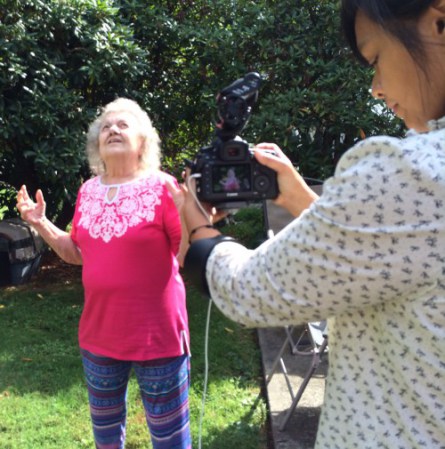
Image from our most recent social biography video in New York. Charisse capturing this mother's reflection of the first time she stood in the backyard of the home her son bought her.

Image from our most recent social biography video in New York. Charisse capturing this mother’s reflection of the first time she stood in the backyard of the home her son bought her.

We are here in her backyard to do a video to keep her son out of prison. She never had a backyard before. She raised her kids, as a single mother, in apartments down the hill in this small New York town. When her son was grown, he walks her by this house and asks her if she likes it. He used to cut the lawn during summers there as a boy. She says yes, and he says, “It’s yours now ma, I bought it for you.” She has cancer now, has had part of her lungs removed. She can’t come out back that often because it gets hard to breath, but standing here used to be her favorite thing. The day she first stood in her backyard (the moment she is recalling now and telling Charisse) she says is the happiest moment of her 85 years. Her son, who now takes care of her full time, is facing prison time, and she is is sharing with us his story, her story, the family story, so we can produce this social biography video for the judge to know the impact of his possible incarceration.

She was scared when probation first came barging in her house, pushing her aside to get her son. But at 85, she is still her son’s mother, and stepped in front of them, and told them not to disrespect the house. When they come now, they knock first, as she asked. She sees them through the window but asks, “Who is it?” They answer, now as polite as she has trained them. And then, sometimes, she makes them wait, just for a brief beat of moment.

Congrats to Jonathan Rapping for Winning McArthur Genius Award!

rapfernOur friend, colleague, and mentor Jonathan Rapping has just received a McArthur Genius Award! Rapping and the Gideon’s Promise team are revolutionizing public defense in this country by both being innovative and forward thinking, yet deeply embedded in the traditions and values of America’s civil rights movement. Check out the piece we wrote on Rapping last year, Gideon’s Army Deserves Back Up. We have been honored to partner with Rapping to train his lawyers at Gideon’s Promise gatherings in Atlanta and North Carolina on our social biography video concept. Below is a pic of Rap with Fernando a couple months back at Wake Forest Law School. Congrats to Rapping and the Gideon’s Promise team! Click the image to see the video on Rapping on the McArthur website.

A Polish Mom and Mexican Brother Become Family While Advocating for Release of Their Loved Ones

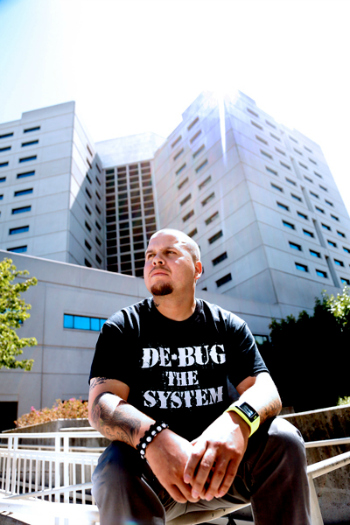
editwoThis photo taken after one of our meetings last week. His brother is facing life in prison. Her son was facing over 10 years in prison. They were strangers. He is from Mexico, she is from Poland. They met while visiting their loved ones at jail. He told her about De-Bug’s ACJP meetings that he had been attending. She started coming. This week, much due to her perseverance, her son will be home in just 5 months, and won’t have to go to prison. A private attorney says her son won’t get any less then 9 years. That attorney was wrong. Today, she to continue to come to meetings to support her new friend’s effort to free his brother. These strangers are united in a unique way, crafted by this both the horror of possibly losing a loved one to the system, and the hope that they can impact the outcome of the case. Respect to the families who are fighting for their loved ones, yet still have the never ending generosity to assist others in similar struggles. May just be the most powerful thing out there, and the only thing that can end mass incarceration.
 

Bringing Social Biography Videos to Alabama to Reduce Charges and Sentences

We recently had the opportunity to travel to a historic touchstone of the civil rights movement — Montgomery, Alabama — to work with and train six public defender offices in producing social biography videos to reduce charges and sentences. Some of the participating offices are brand new, born from a call from the community to create public defender offices in order to better protect the rights of the indigent, while others have had decades of history of advocating in the courts. We are excited to equip these offices — long-standing and new — with this tool as they advocate for justice for their clients. Here are some flicks, from our great connection in the South!

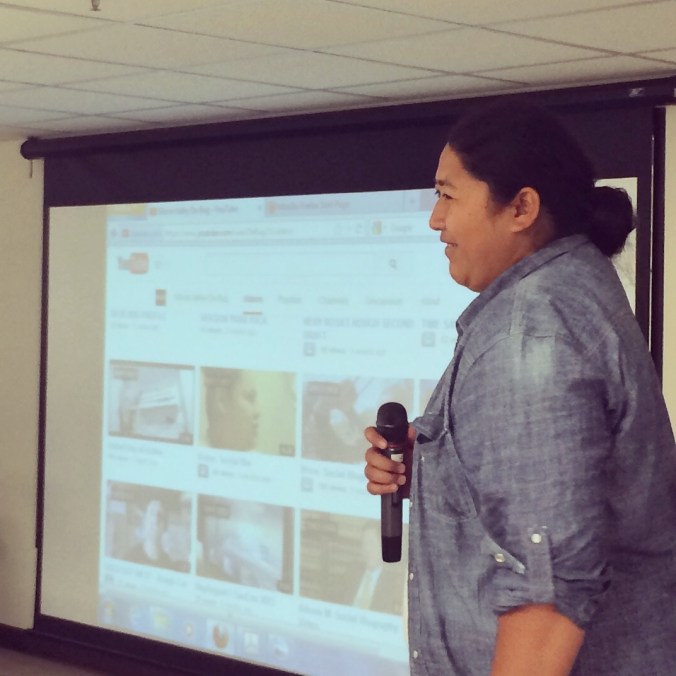
Jean sharing the concepts of how to tell a family story for the courts.

Jean sharing the concepts of how to tell a family story for the courts.

Continue reading