For Trayvon Martin And America, Justice Hinges on Two Words: “Prosecutorial Discretion”

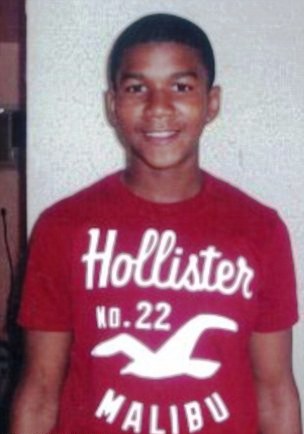
As the tragedy of Trayvon Martin’s death calls the country to examine the racial inequities of the criminal justice system, the conversation must go beyond the impulse to only focus on the man who took his life, George Zimmerman, and the police who let him walk out of their station. If we are to have any meaningful impact on how the system really works, we have to go where the real power lies – with the prosecutors, the ones who control the levers of the system in counties and states across the country.

In Martin’s case, it was prosecutor Norm Wolfinger who decided that Zimmerman should be not charged or detained that fateful evening. That moment of choice by Wolfinger is the most revealing part of the Trayvon Martin tragedy in terms of the vulnerabilities of the criminal justice system. Wolfinger was not acting as a rogue decision-maker circumventing the rules of law enforcement – he was exercising “prosecutorial discretion” – the awesome legal authority given to prosecutors to decide if an act is a matter, or not, for the criminal justice system to consider. Continue reading


Stopdeportingyouth.com — New Site Highlights Local Efforts to Stop Juvenile ICE Holds in San Mateo County

With the Stanford Immigrants Rights Clinic, Community Legal Services in East Palo Alto, Immigrant Legal Resource Center, Youth United for Community Action, ACLU North Peninsula Chapter, Comite de Padres Unidos, and Nuestra Casa, we at Silicon Valley De-Bug have helped lead efforts to stop San Mateo County Probation’s practice of juvenile ICE holds in San Mateo County.  Families have come to De-Bug seeking support for their son’s or daughter’s cases where they have been caught up in juvenile hall and then sent to immigrant detention centers across the country — youth as young as 13. For the last four years, we’ve seen an increase in this number of families like no other, beginning with one mother from East Palo Alto who was so distraught at the thought of her 16 year old daughter being deported back to a country that she left when she was 3.  We learned that it was her PO who reported her to ICE, and initially, we thought it was a mistake.  But it turned out to be the complete opposite — this was actually routine practice.  In fact, San Mateo County is the second highest referrer of juveniles to ICE in California — second only to Orange County, according to statistics obtained by Immigrant Legal Resource Center from the Office of Refugee Resettlement.

As part of the coalition’s efforts in the last nine months, we at De-Bug created this page, www.stopdeportingyouth.com, to highlight not just the practice of referring youth to ICE, but the strong stance that a broad-based coalition has taken to urge our county to do otherwise. We believe San Mateo County can do better.  Submission Post by Charisse Domingo

Click here or on the picture below to take you to the site.

After Late-Night Vote, Conn. Poised to Do Away with Death Penalty: Wall Street Journal

Death penalty banned in yet another state.-Post Submission by Cesar Flores

The vote didn’t come easy, but opponents of capital punishment got what they wanted early this morning in Connecticut when the state senate voted to approve a bill that would remove the death penalty from the books.

The state is now poised to become the 17th state to abolish the death penalty. Thirty-four states still have it.

According to this Hartford Courant story, the 20-16 vote came just after 2 a.m. this morning, after more than 10 hours of debate. The measure now moves to the state House of Representatives, where it has broad support, according to the story. Gov. Dannel P. Malloy has pledged to sign the bill once it reaches his desk. Click here for a WSJ story that ran shortly before the vote.

The bill passed largely on party lines, with two Democrats joining the Republicans in an unsuccessful attempt to shoot down the bill. The bill would replace the death penalty with life in prison without the possibility of release, but stipulates that the 11 men currently on Connecticut’s death row would still face execution. Continue reading

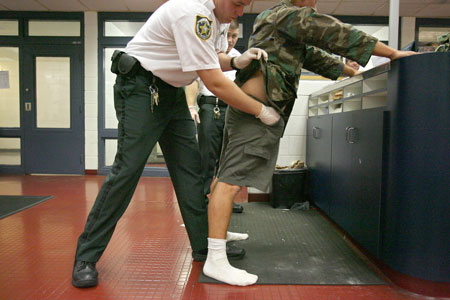
Supreme Court Rules Any Offense, However Minor, Allows for a Strip Search

Post submission by Aram James: The US Supreme Court today –in a 5-4 decision (Florence v. Board of Chosen Freeholders of County of Burlington) ripped at the heart of our of 4th Amendment – our right to be free of illegal and unreasonable searches and seizures; and our right to insist that before the government invades our privacy, our homes, our cars, our bodies—that they must have probable cause to do so.  Today’s decision does away with the probable cause requirement for strip-searches– for even the most minor offense i.e., violation of a leash law.

Today’s decision states only that jail officials may strip-search anyone arrested who will subsequently be placed in the general population of a jail or prison –even for the most innocuous offense—not that they have to or must be strip-searched.  The decision leaves wide-open discretion to jail officials to determine who and under what circumstances someone shall be subject to an invasive strip-search. Continue reading

San Jose Stands Up for Trayvon Martin

This past Friday, March 30, 2012, San Jose residents of all ages and backgrounds gathered at San Jose City Hall to honor the life of Trayvon Martin, and to voice outrage at the injustice of his death. At the rally, organizations such as the NAACP, the Black Leadership Kitchen Cabinet, and Silicon Valley De-Bug/ACJP called on both city and county officials to sign a proclamation calling for justice for Trayvon Martin. Here are some photos:

Miguel Gonzalez made his own shirt to honor Trayvon.

Gail Noble and Nanji Jayadev.

Becky Cardenas stands with Oscar Grant's Uncle Cephus Johnson who recently returned from a trip visiting with the Martin family.

Former City Councilmember Forrest Williams addresses the crowd.

Malcolm Lee does a spoken word piece in honor of Trayvon.

California Bills on Juveniles, Realignment, Reentry, and a New Life Sentence

Our friends in Sacramento from the Criminal Justice Information Network sent us an update on the criminal justice bills being debated on the legislative floors. Below is a listing and their status. One particular bill that we have our eye on is AB 1709 — which would allow for jury trials for minors in particular cases. Interesting concept, wondering how it would impact conviction rates (what is called “sustained petitions” in juvenile court). Let us know what you think too! Post submission by Raj Jayadev

Bills on Juveniles, Realignment, Reentry, and a New Life Sentence 

Today in Assembly Public Safety Committee, bills that would support defendants and their families with record-sealing, reentry, and due process were approved. One bill to increase law enforcement representation on county realignment boards was also passed. Additionally, a bill to add a life sentence to the existing offense for human trafficking of a minor was voted down by the committee. Continue reading

Trayvon Martin, Unarmed and Innocent: New York Times

Another Tragic death. We all should take deep look at our laws and the ways they affect people in practice before another tragic occurrence like this happens. Check out this moving article by a 19 year old teen from New York speaking his thoughts on the incident. – Post Submission by Cesar Flores

You would never think a walk to the store would get you killed, right? Well, that was what happened to 17-year-old Trayvon Martin. As he was coming back home from the store carting an iced tea and Skittles, a neighborhood watch volunteer named George Zimmerman felt “intimidated” by the young man and shot him, killing him.

This brings up a lot of questions: When does an innocent high school student become “intimidating,” “threatening” or “suspicious”? How intimidating can someone be with a few munchies in their hand, just walking down the street? If you’re a black kid with a hoodie, is it immediately assumed that you’re “bad” or a “troublemaker”? Would things have been different if Martin was a white kid strolling down the street or if he had been dressed differently? Continue reading

Los Angeles Times: Supreme Court Expands Defendant’s Rights In Plea Deals

In both the federal and state court systems, 9 out of 10 cases end up in a plea bargain, wiping out the notion of your “day in court”.  Both Santa Clara and San Mateo Counties are no different. We know families with loved ones serving long prison sentences, had their children taken away, or ended up in deportation proceedings because of a plea bargain gone wrong.  But the Supreme Court ruled this week that defendants have a right to competent counsel during the plea bargaining phase of the criminal justice system.  This ruling honestly is a little surprising, because you’d think effective assistance of counsel should extend to all phases of the justice system already.  But this seals the clarity once and for all.  Submission post by Charisse Domingo

Supreme Court expands defendant’s rights in plea deals

In two 5-4 decisions, the Supreme Court rules that defendants in criminal cases have a constitutional right to a competent lawyer’s advice when deciding whether to accept a plea deal.

By David G. Savage, Washington Bureau
Los Angeles Times
March 21, 2012

Reporting from Washington—

Defendants in criminal cases have a constitutional right to a competent lawyer’s advice when deciding whether to accept a plea bargain, the Supreme Court ruled, providing a significant expansion of rights that could have a broad impact on the justice system. Continue reading

Supreme Court Revisits Issue of Harsh Sentences for Juveniles: New York Times

Do you feel that juveniles should be charged with the death penalty? You be the judge. – Submission by Cesar Flores

WASHINGTON — At a pair of Supreme Court arguments on Tuesday, the justices returned to the question of what the Constitution has to say about harsh sentences imposed on juvenile offenders.

A majority of them appeared prepared to take an additional step in limiting such punishments, but it was not clear whether it would be modest or large. The court’s precedents have created so many overlapping categories — based on age, the nature of the offense and whether judges and juries have discretion to show leniency — that much of the argument was devoted to identifying the possible lines the court could draw. Continue reading