Palo Alto Weekly: When Sentencing Young Lawbreakers, Race Matters, Study Funds

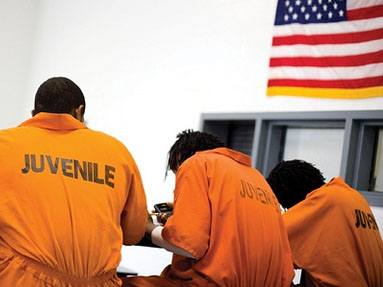
Thought provoking study by Stanford University’s Department of Psychology that found that when people were told that a juvenile defendant was Black, the consequences for the crime were harsher than if the juvenile defendant was White.  More than just proving that racial prejudice exists, the authors of the study worry about the implications of these results on the actual protections for juveniles under a system that is supposed to be considered rehabilitative.  At ACJP, we’ve seen this not just in the sentencing phase of a case but even at the charging stage.  We hope that this leads to a broader discussion of racism and the juvenile justice system. To read the full report, click here.  — Submission Post by Charisse Domingo
When sentencing young lawbreakers, race matters, study finds

Public favors harsher punishments when criminals are black, researchers say
by Sue Dremann
Palo Alto Weekly, 6/2/2012

People’s opinions on whether youth who break the law should be sentenced as adults vary significantly when a single word — black or white — is used to describe the defendant, a new study by Stanford University’s Department of Psychology has found.
Continue reading

Bay Area Legal Leaders Move on From Their Posts, While Leaving a Legacy of Community Collaborations

In one season, Bay Area families are seeing three prominent leaders of legal institutions that have fought for, and in some cases, created, protections for low-income and marginalized communities, leave their posts. Mary Greenwood, the Santa Clara County Public Defender, and Miguel Marquez, the Santa Clara County County Counsel, have been appointed by Governor Brown to move on judgeship. Michael Kresser, the Executive Director of the Sixth District Appellate Project, is retiring after helping start the non-profit in 1985. While the three led distinctively different agencies, each were able to advance the rights of indigent and marginalized communities through their willingness to listen to, and work with, the communities they served. Through their collective leadership, Santa Clara County expanded its indigent defense, held prosecutorial misconduct in check, and created nationally recognized policy protections for immigrants.

Certainly, as new leadership is developed at each respective legal agency, a continuance of this inclusive, community-partnering approach is vital to continue the legacy laid-down by Greenwood, Marquez, and Kresser. Continue reading

Man freed on bond but must write book reports// sfgate.com

Working with people within the criminal justice system, I have seen more and more made up sentences like the one depicted below. Sometimes for the better sometimes for the worst. But thats just my opinion. Please leave comments to let me know what you think. – Post submission by Cesar Flores


Richmond California

A man charged in an undercover sting operation in Northern California that ended in gunfire has been ordered released on bond on the condition that he read and write book reports.

U.S. District Judge Yvonne Gonzalez Rogers allowed 23-year-old Otis Mobley to be freed Monday, although she delayed an order to allow prosecutors to appeal her decision.

The San Francisco Chronicle reports that under the bond order, Mobley would be required to spend an hour reading and a half hour writing each day as he awaits trial on robbery and assault charges.

Mobley and two others are accused of arranging to sell a grenade launcher for $1,000 to an undercover federal agent in Richmond, Calif. Hutcherson was shot and wounded by agents during the alleged meeting.


Los Angeles Times: Agency That Runs California Courts ‘Dysfunctional,’ Report Says

A recent report shames the California court system as “dysfunctional” and should be reorganized. Who suffers at the cost of this lavish bureaucracy are families and individuals who go to these courthouses fighting cases where they feel they have been wronged.  We are hopeful that this report can spark change. Submission Post by Charisse Domingo

Agency that runs California courts ‘dysfunctional,’ report says

By Maura Dolan, Los Angeles Times
May 30, 2012
The agency that runs the California court system has become “dysfunctional” and bloated with high-salaried bureaucrats and requires a major overhaul, according to a report ordered by California Chief Justice Tani Cantil-Sakauye.
The 300-page report, which will be presented to judicial branch leaders next month, comes as the courts are trying to stave off large budget cuts from Sacramento. Although ordered by Cantil-Sakauye and written by a committee she named, the highly critical evaluation may undermine the chief jurist’s efforts to roll back projected budget cuts of about $544 million.

Continue reading

Ella Baker Center: Drugs can be Hell. Being Labelled a ‘Felon’ is a Killer.

Here is a piece posted on “Ella’s Voice” from our friends at the Ella Baker Center. They are co-sponsoring a bill SB 1506 (Leno) that would treat drug possession for personal use as a misdemeanor rather then a felony. The bill would save the state tremendous amounts of needed resources, and take a step towards a more rationale response to drug use. As we know from the hundreds of families we have seen torn apart from overly punitive sentencing from drug charges, this bill could literally change the fate of families across the state. Check out the testimonial below.

By “Emily J” — It took me years to understand, but my history of drug addiction was a way to avoid dealing with issues I had. While I was in prison for a drug-related crime, my mother died. Then, my son was killed. I was devastated. No mother should ever have to go through what I went through. At that point, I decided I would do whatever it takes to overcome my addiction. I made a clean start. I moved to a new city where I didn’t know anyone and focused on staying sober and finding work. Continue reading

Chicago Based People’s Tribune Newspaper Profiles ACJP!

Special thanks to advocate, attorney and journalist Robin Yeaman’s who wrote a piece profiling ACJP’s work in San Jose, and Reverend Pinkney in Detriot. The piece ran in the People’s Tribune, a nationally distributed monthly newspaper. In the piece, author Robin Yeaman’s also points out how people’s ability to effectively monitor and participate with the court process can be a matter of which state they live in.  But in any state, families have a right to be heard, and a have a place in the courtroom!

Fighting for Justice by Court Watching Continue reading

National Registry of Exonerations: 885 Wrongful Convictions Since 1989

Ronald Reno, right, and his girlfriend Debbie Brown hug Kathleen “Cookie” Ridolfi, executive director of the Northern California Innocence Project, after a press conference about the exoneration of Reno, wrongly convicted of a crime which resulted in his “third strike.” (SAN JOSE MERCURY NEWS / Nhat V. Meyer)

Check out the article by Tracey Kaplan for the Mercury News. The piece highlights the findings of the new “National Registry of Exonerations”, which is tracking the number of exonerations across the country. The report, which is attached in the article link, allows viewers to examine exonerations by state and county numbers. A striking finding is the differences among a common geographic regions, such as the Bay Area. In Santa Clara County, there has been 10 exonerations, yet zero in neighboring Alameda County. Continue reading

Colorlines: The Criminal Cost of Talking to a Loved One Behind Bars

For many of our loved ones who are jailed or incarcerated, being able to make a phone call is a precious way to be able to keep connected, to fight loneliness, and to be reassured that you are not alone as you fight your charges.  Private companies that oversee the prison phone calls, however, capitalize on this and charge ridiculously high amounts for this connection, with rates for a 15 minute phone call as expensive as $10.95.  42 states in the nation actually receive a commission out of these calls as well.  This week, the Center for Media Justice, along with Prison Legal News and Working Narratives, launched an effort to get prison phone rates onto the FCC’s legislative to-do list.  Submission Post by Charisse Domingo

The Criminal Cost of Talking to a Loved One Behind Bars

Story By Leticia Miranda
Art by Hatty Lee
May 14, 2012
Colorlines

When Martha Wright’s grandson was moved to a prison outside of her hometown of Washington, DC., she didn’t expect that a short 5-minute conversation with him could cost up to $18.

“You just have to get everything out in one line,” she laughs.

Continue reading

Bump California death penalty measure from November ballot, group says: Mercury News

Controversy on whether we should keep or be done with the death penalty within California. Where Do you side? -Post submission by Cesar Flores

A law-and-order group on Monday asked a state appeals court to bump a measure off the November ballot that would repeal California’s death penalty, arguing that it violates a state rule against proposing multiple reforms.

The ballot language is “deceptive” and conflicts with the state’s limit of voter initiatives to a single subject, the Criminal Justice Legal Foundation argues in a petition filed with the Sacramento-based 3rd District Court of Appeal.

The foundation brought the lawsuit on behalf of Phyllis Loya, the mother of a Pittsburg police officer fatally shot in 2005 whose killer was sent to death row by a Contra Costa County jury.

The SAFE California Act would abolish the death penalty, clear the state’s death row and replace capital punishment with life in prison without the possibility of parole. But the measure also provides for shifting as much as $100 million used for death penalty costs to a fund that would pay for solving murder and rape cases. Continue reading

San Mateo County Board of Supervisors Vote to Build New Jail

Last Tuesday, the San Mateo County Board of Supervisors voted to spend approximately $155 million to build a new jail in the county.  Proposed by Sheriff Greg Munks, the construction of a new jail is supposed to relieve overcrowding in the current jail, create space for a women’s facility, and address the potential overflow as a result of AB109, the California realignment plan that makes counties deal with low-level offenders.

Instead of addressing why there are high incarceration rates to begin with, the County chose to just figure out how to house the growing population.  Community advocates such as All of Us Or None led by Dorsey Nunn, Critical Resistance, and Youth United for Community Action in East Palo Alto showed up at the Board of Supervisors meeting last Tuesday to state their opposition to the jail, saying the money put towards the jail only takes away from community services. “This is a jail for future generations,” Dorsey said. “Not only will they take our sons and daughters, but our grandkids.”

YUCA, a youth organization in East Palo Alto committed to environmental and social justice, first got involved about 2 years ago when the jail was being proposed to be built in East Palo Alto.  They collected over 400 petitions and got the City to declare their opposition to the jail construction in the community.  However, regardless of where the jail was in the county, YUCA youth were also opposed to the idea.  Anna Turner, a longtime resident in the community and is a Program Director at YUCA, attended the Board meeting as well.  “We should be spending the money on preventative measures, targeting the root cause of crime, not just locking people up.  Plus, we don’t want this jail to target undocumented people as well.”  YUCA and community advocates are looking to challenge the county’s decision.

At De-Bug’s ACJP, we’ve seen incarceration be too easy of an answer for San Mateo County.  We have seen some of the harshest sentences imposed on San Mateo County defendants, and on the front end, some of the most extreme charges placed on people that will almost always guarantee a plea bargain.  Compounded by this is ICE’s Secure Communities Program that has entangled immigration and criminal justice laws, and turned every police officer into an ICE agent.  We have seen immigrants with ICE holds beat their charges, have their charges dismissed or dropped, or could have been eligible for drug programs like Prop 36 but because of their ICE holds have been sent away to federal detention facilities.  

We feel that this decision to build a jail is counter to what seems like a regional trend of dealing with criminal justice issues in a more holistic and progressive way.  We hope the county rethinks this decision, and takes a more courageous, creative, and cost-effective stance to deal with the criminal justice system. — Submission Post by Charisse Domingo