Calling in For Justice: EastValley ACJP Starts New Wrongful Conviction Case Via Phone from Prison Cell

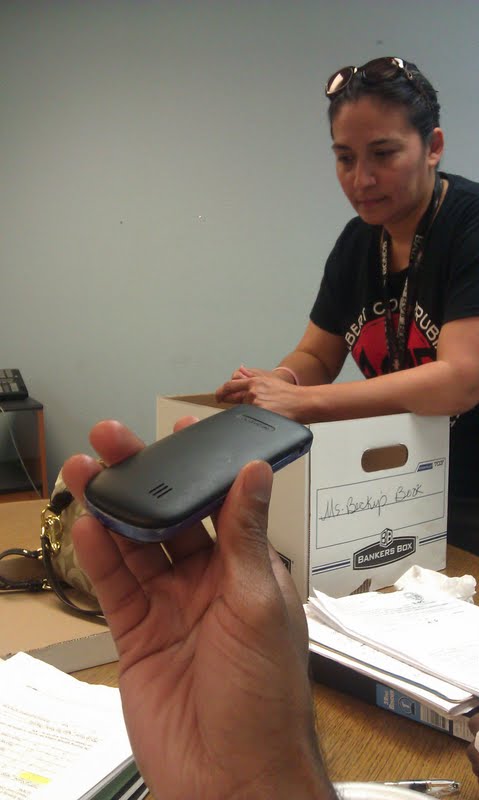
At last night’s ACJP meeting at East Valley Pentacostal Church, Becky took a call from a childhood friend who was wrongfully convicted and faces a life sentence. He has been incarcerated for the past 17 years. Today, ACJP begun the work to support him in his path to freedom. In the image, he is calling on speaker phone, with Becky listening while a pile of his paperwork is laid out on the table, waiting for us to review. Just after the call, we found out we got an ACJP member’s case from life to one year in county. So finishing beating one life sentence, and starting the path to beat another. Just another Tuesday night with Becky and the ACJP team at East Valley Pentacostal Church!

I Smell a Rat: The Use of Snitch Testimony in Obtaining Criminal Convictions

– Post Submission By Cesar Flores

The ACJP crew had an early morning. We all saddled up and went to the Northern California Innocence Project’s (NCIP) monthly continental breakfast presentation.

It was very informative, looking at a different insight on how a testimony against a fellow inmate could become such a big mess due to what one inmate gains from giving a testimony.

A video that was shown about how an inmate got all of the information on his fellow inmate through posing as a criminal investigation officer and district attorney. He said that gaining evidence against another inmate in jail “is a market.”

Reflecting on the breakfast, I’m Glad I woke up early to go. Maybe you could come next time.

More information on today’s breakfast is below.

I Smell a Rat: The Use of Snitch Testimony in Obtaining Criminal Convictions

Speaker: Chuck Sevilla

Convictions based on the testimony of jail house snitches, someone who stands to gain something in exchange for his testimony against another, contribute to more than 15% of the cases of wrongful conviction overturned by DNA testing. Yet snitch testimony is frequently used at trial. Using case examples, we will explore the use and misuse of snitch testimony and the risks inherent in that use, such as: How and when do prosecutors rely on “snitch” testimony? What motivates snitches to provide this information. Why does California now require inmate snitch testimony to be corroborated?

For Trayvon Martin And America, Justice Hinges on Two Words: “Prosecutorial Discretion”

As the tragedy of Trayvon Martin’s death calls the country to examine the racial inequities of the criminal justice system, the conversation must go beyond the impulse to only focus on the man who took his life, George Zimmerman, and the police who let him walk out of their station. If we are to have any meaningful impact on how the system really works, we have to go where the real power lies – with the prosecutors, the ones who control the levers of the system in counties and states across the country.

In Martin’s case, it was prosecutor Norm Wolfinger who decided that Zimmerman should be not charged or detained that fateful evening. That moment of choice by Wolfinger is the most revealing part of the Trayvon Martin tragedy in terms of the vulnerabilities of the criminal justice system. Wolfinger was not acting as a rogue decision-maker circumventing the rules of law enforcement – he was exercising “prosecutorial discretion” – the awesome legal authority given to prosecutors to decide if an act is a matter, or not, for the criminal justice system to consider. Continue reading

After Late-Night Vote, Conn. Poised to Do Away with Death Penalty: Wall Street Journal

Death penalty banned in yet another state.-Post Submission by Cesar Flores

The vote didn’t come easy, but opponents of capital punishment got what they wanted early this morning in Connecticut when the state senate voted to approve a bill that would remove the death penalty from the books.

The state is now poised to become the 17th state to abolish the death penalty. Thirty-four states still have it.

According to this Hartford Courant story, the 20-16 vote came just after 2 a.m. this morning, after more than 10 hours of debate. The measure now moves to the state House of Representatives, where it has broad support, according to the story. Gov. Dannel P. Malloy has pledged to sign the bill once it reaches his desk. Click here for a WSJ story that ran shortly before the vote.

The bill passed largely on party lines, with two Democrats joining the Republicans in an unsuccessful attempt to shoot down the bill. The bill would replace the death penalty with life in prison without the possibility of release, but stipulates that the 11 men currently on Connecticut’s death row would still face execution. Continue reading

Supreme Court Rules Any Offense, However Minor, Allows for a Strip Search

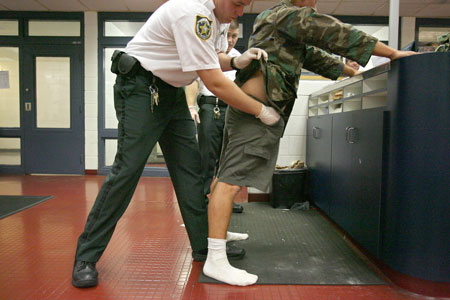
Post submission by Aram James: The US Supreme Court today –in a 5-4 decision (Florence v. Board of Chosen Freeholders of County of Burlington) ripped at the heart of our of 4th Amendment – our right to be free of illegal and unreasonable searches and seizures; and our right to insist that before the government invades our privacy, our homes, our cars, our bodies—that they must have probable cause to do so.  Today’s decision does away with the probable cause requirement for strip-searches– for even the most minor offense i.e., violation of a leash law.

Today’s decision states only that jail officials may strip-search anyone arrested who will subsequently be placed in the general population of a jail or prison –even for the most innocuous offense—not that they have to or must be strip-searched.  The decision leaves wide-open discretion to jail officials to determine who and under what circumstances someone shall be subject to an invasive strip-search. Continue reading

Los Angeles Times: Supreme Court Expands Defendant’s Rights In Plea Deals

In both the federal and state court systems, 9 out of 10 cases end up in a plea bargain, wiping out the notion of your “day in court”.  Both Santa Clara and San Mateo Counties are no different. We know families with loved ones serving long prison sentences, had their children taken away, or ended up in deportation proceedings because of a plea bargain gone wrong.  But the Supreme Court ruled this week that defendants have a right to competent counsel during the plea bargaining phase of the criminal justice system.  This ruling honestly is a little surprising, because you’d think effective assistance of counsel should extend to all phases of the justice system already.  But this seals the clarity once and for all.  Submission post by Charisse Domingo

Supreme Court expands defendant’s rights in plea deals

In two 5-4 decisions, the Supreme Court rules that defendants in criminal cases have a constitutional right to a competent lawyer’s advice when deciding whether to accept a plea deal.

By David G. Savage, Washington Bureau
Los Angeles Times
March 21, 2012

Reporting from Washington—

Defendants in criminal cases have a constitutional right to a competent lawyer’s advice when deciding whether to accept a plea bargain, the Supreme Court ruled, providing a significant expansion of rights that could have a broad impact on the justice system. Continue reading

De-Bug Media: Profile of a Public Defender Who’s From the Community He Serves

Andy Gutierrez, SCC Deputy Public Defender

Check out the profile of Santa Clara County Deputy Public Defender Andy Gutierrez. We first met Andy when he represented an ACJP family who’s grandmother was facing a 3 year sentence for an alleged dirty bottle. Everyone said it was a done deal – she was headed to prison. Gutierrez was determined to keep her with her family, and she ended up with an outpatient drug program instead. She is doing great, and it wouldn’t have happened without Andy.

By Diane Solomon — Andy Gutierrez defends poor people accused of committing Santa Clara County’s most heinous crimes. Before I spoke to him, his Deputy Public Defender job seemed awful and really hard to me. But when he explains his work, he conveys this sense of commitment, a calling to a higher purpose and enthusiasm.

“I always knew I wanted to go into criminal law because I just liked it. I like the science part of it; I like the investigation part of it. What happens when you have to champion the underdog all of the time is that the chips are always down, so your life is interesting because every person you have to help is usually an amazing challenge.” Continue reading

New York Times: Go To Trial – Crash the Justice System by Michele Alexander

Many times – -the 98% plea rate in Santa Clara County continues to allow the District Attorney to insist on–and to threaten– long prison sentences because in essence –we have allowed the DA to continue to hold all of the cards. The we in this case being our legal representatives — mostly the institutional public defender system– that we pay the taxes for to keep them in existence. In this editorial that appeared in the New York Times, Michele Alexander talks about how if the justice system can be turned around if more people just insisted on their cases going to trial.  Submission Post by Aram James

OPINION

Go to Trial: Crash the Justice System

by Michele Alexander
Photo by Edward Keating
New York Times
SAturday, March 10, 2012

After years as a civil rights lawyer, I rarely find myself speechless. But some questions a woman I know posed during a phone conversation one recent evening gave me pause: “What would happen if we organized thousands, even hundreds of thousands, of people charged with crimes to refuse to play the game, to refuse to plea out? What if they all insisted on their Sixth Amendment right to trial? Couldn’t we bring the whole system to a halt just like that?”
Continue reading

Illinois Governor Proposes Closing SuperMax Prison!

Congrats to our friend Laurie Jo Reynolds, and the rest of the Tamms Year Ten Committee, for their tremendous victory! Check out the story reported by the Belleville News-Democrat and Associated Press.– Post submission by Raj Jayadev

BY BETH HUNDSDORFER – News-Democrat — Gov. Pat Quinn has proposed closing the state’s only supermax prison — the Tamms Correctional Center in Southern Illinois, the Associated Press reported Tuesday. The approximately 200 inmates held at Tamms live in nearly continuous solitary confinement, the Belleville News-Democrat reported. The prison was built in 1998. The BND published an investigative series in August 2009 reporting that many inmates at Tamms were mentally ill and became worse because of long-term solitary confinement in the prison located in the southern tip of Illinois. It holds inmates the state describes as the “worst of the worst.” Read More…